
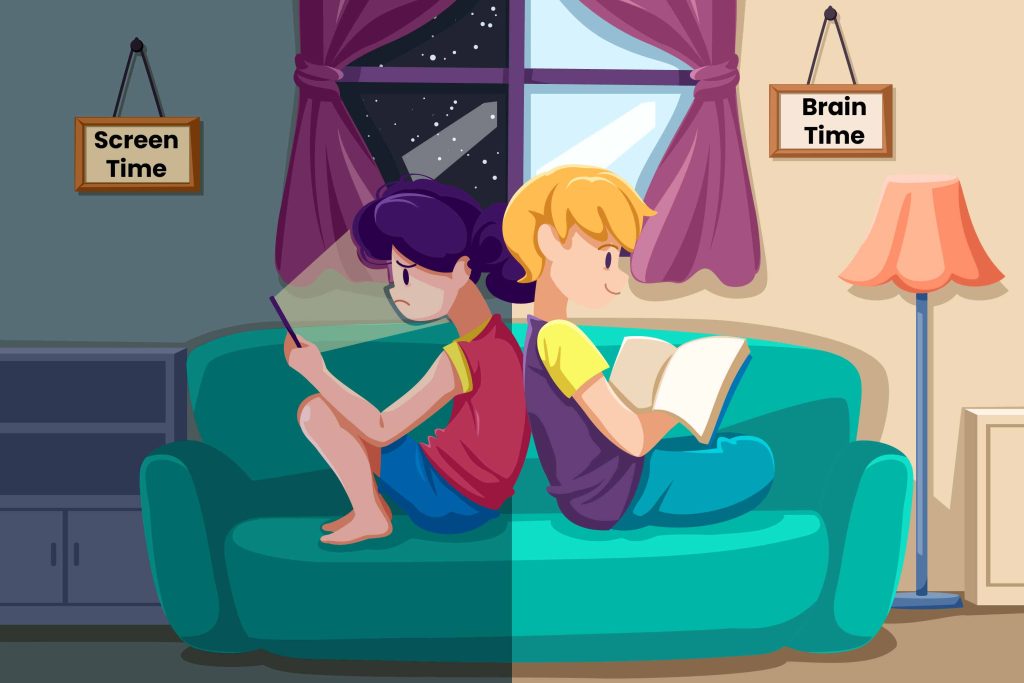
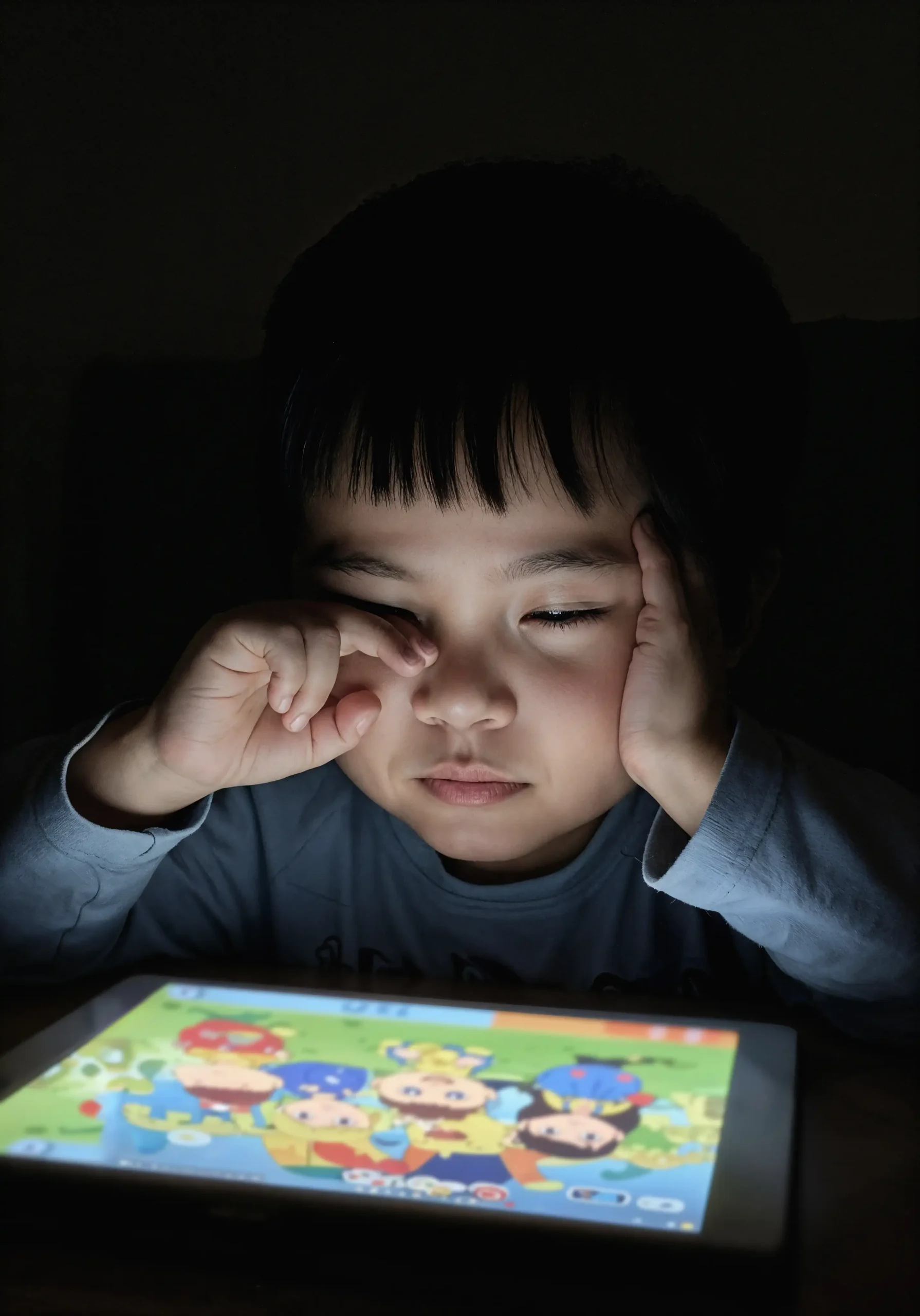
What Is Screen Time?
Screen time includes:
- Watching TV or YouTube
- Playing games on mobile or tablet
- Using learning apps
- Online classes
Not all screen time is bad — but too much, too early, and unbalanced screen exposure can affect brain development.
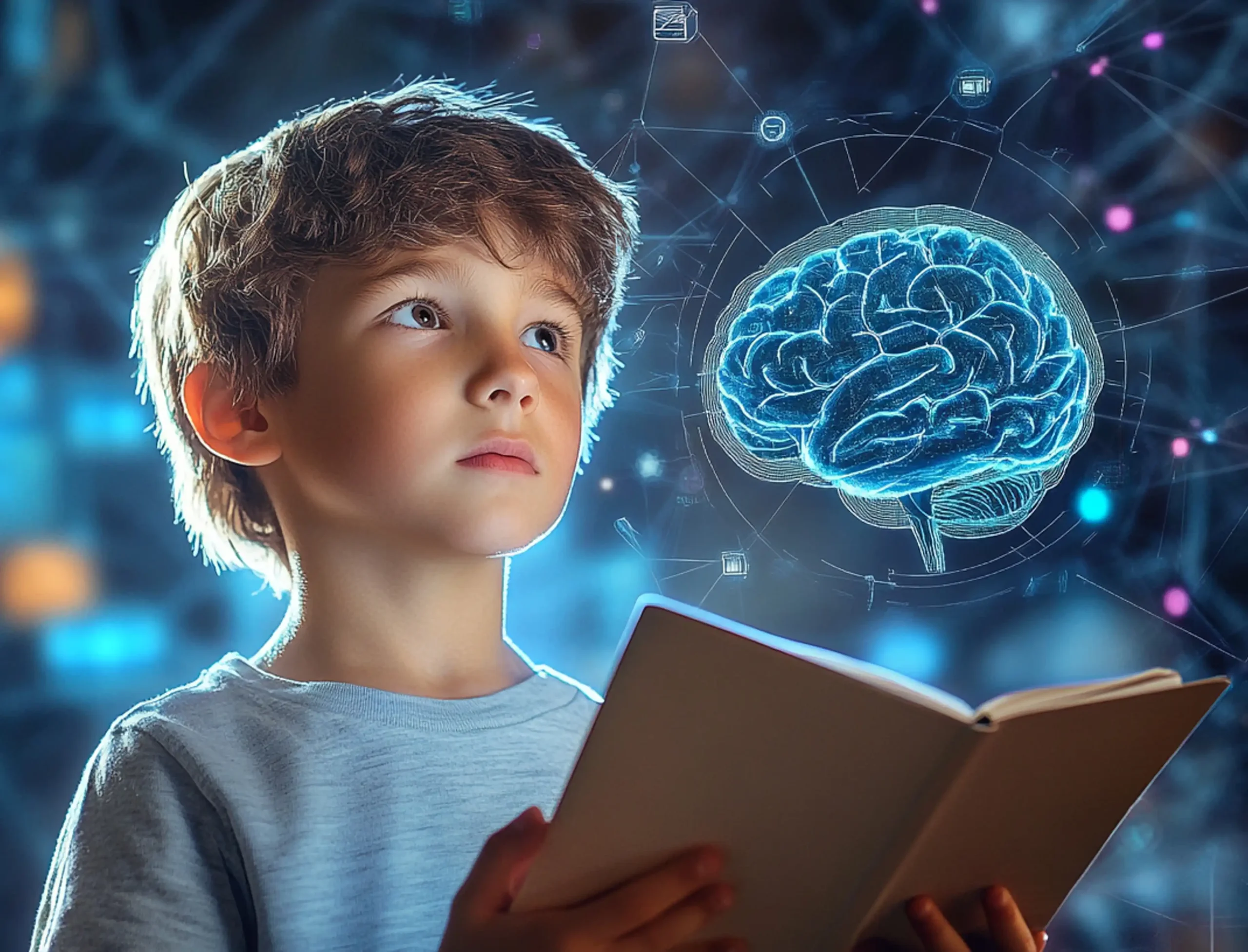
What Is Brain Time?
Brain time refers to activities that actively develop the brain, such as:
- Visual memory exercises
- Listening and observing
- Pattern recognition
- Imagination and creativity
- Calm concentration
- Real-world sensory experiences
Brain time is active learning, not passive consumption.
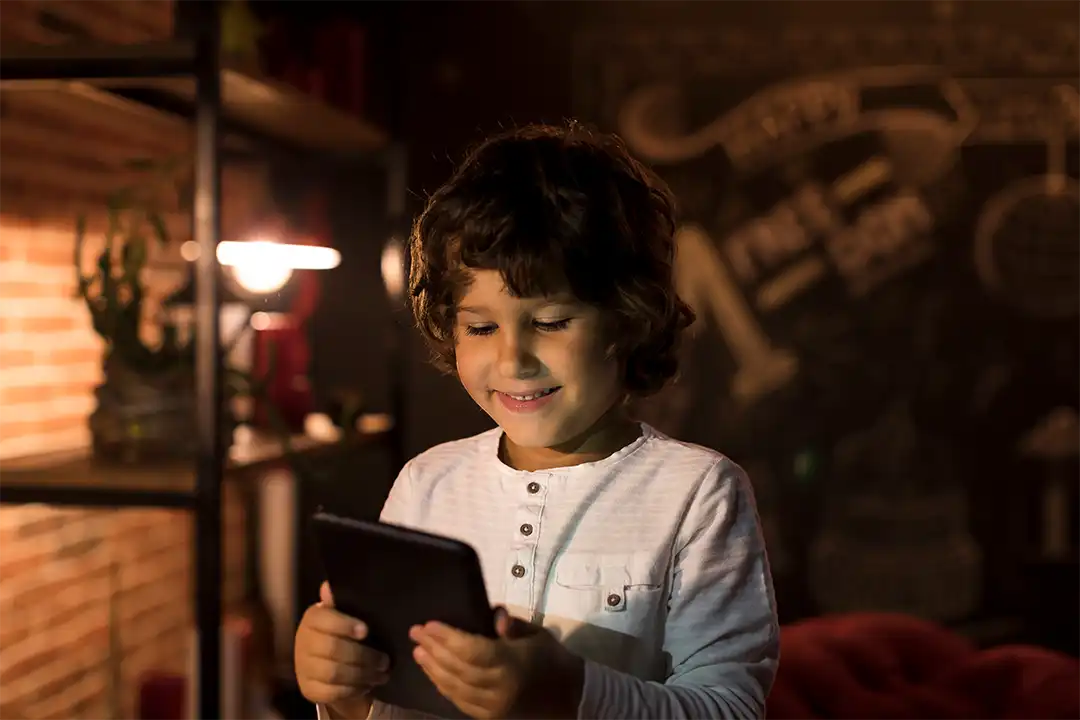
How Screens Affect the Young Brain
During early childhood (0–6 years), the brain develops rapidly. What a child repeatedly experiences becomes wired into their brain.
- Reduce attention span
- Affect eye–brain coordination
- Delay language development
- Lower patience and self-control
- Create dependency on constant stimulation
👉 The brain gets used to fast input, not deep thinking.
Why Educational Apps Aren’t Always Enough
Many apps claim to be “educational.” But most of them:
- 🎁 Give instant rewards
- ⚡ Use bright, fast-changing visuals
- 👆 Encourage tapping, not thinking
The child becomes a receiver, not a thinker.
Learning happens when the brain processes — not when it is entertained.
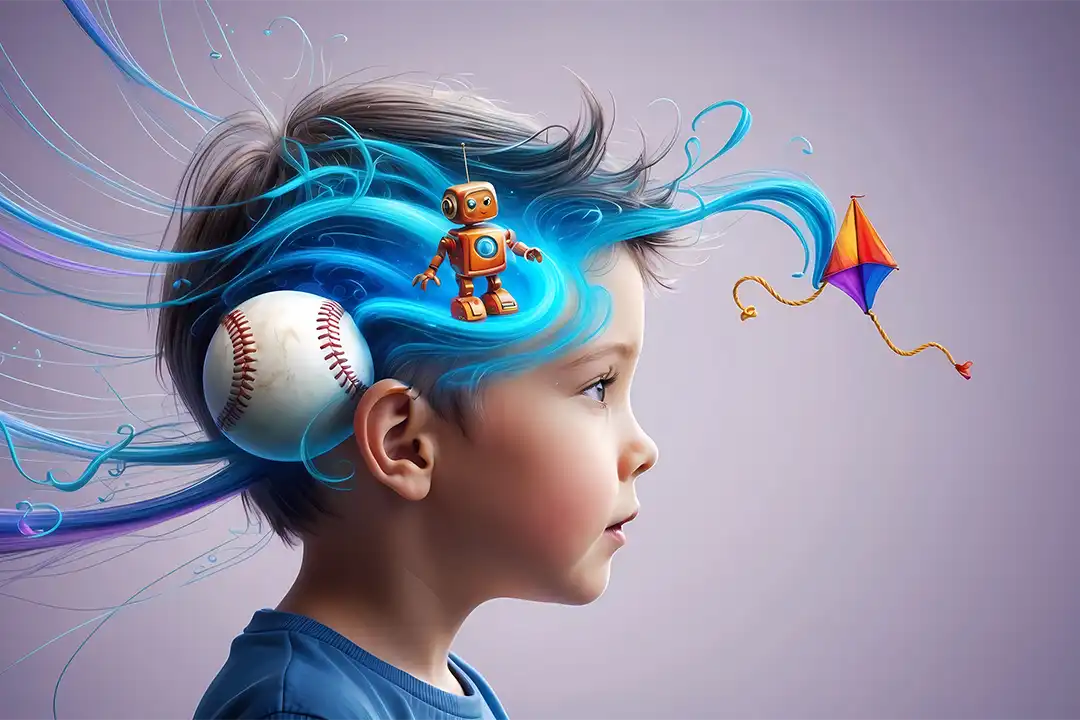
Screen Time vs Brain Time: The Real Difference
📱 Screen Time
- Passive
- Fast-paced
- Short attention
- External stimulation
🧠 Brain Time
- Active
- Calm and focused
- Deep concentration
- Internal thinking
Both can exist — but brain time must come first.

What Parents Can Do (Practical Tips)
1. Delay Screens as Much as Possible
Especially before age 3, real-world experiences matter far more than digital ones.
2. Set Clear Screen Boundaries
Fixed timing is better than frequent, random usage.
3. Replace Screens With Brain-Building Activities
- Flashcards
- Listening games
- Storytelling
- Memory play
- Calm observation activities
4. Be a Role Model
Children copy adult behaviour. Reduced screen use by parents makes a big difference.